Mac App Exchange Calendar Client
Make sure to use the most current version of your desktop client software, especially Office 2016 or 2019 (Windows), or 2016 or 2019 (Mac). Mobile devices are known to have issues with ActiveSync, especially those running older versions of their system software.
In the Calendar app on your Mac, choose Calendar Preferences, then click Accounts. Select the calendar account, then click Delegation. A CalDAV account appears in the “Accounts I can access” list. For an Exchange account, click Add button, then enter the user name of the person who gave you access. To see a delegated account’s calendars in the main Calendar window, select Show. Oct 01, 2015 When a user syncs a mailbox on an iOS device with a Microsoft Exchange ActiveSync client, the calendar on the device may be missing one or more appointments. These appointments are available when you view the calendar from Outlook or Outlook Web App (OWA). Also, there may be duplicate instances of the appointment in the calendar when the. If just want to manage your Exchange email account on the Mac, you can use the Mac Mail app to connect to your account using Internet Message Access Protocol (IMAP) or Post Office Protocol (POP). Set up Exchange account access using Outlook for Mac. If you have Outlook for Mac, you can use it to access your Exchange account. Dec 09, 2019 Apple Calendar allows you to pull in info from other calendars, too, such as Google Calendar, Microsoft Exchange, Yahoo, and any calendar that uses CalDAV. Setting this up is as easy as connecting an email client app to another email account. May 19, 2020 For personal users a calendar app can be incredibly useful, but for business calendar apps can be essential. When for personal use, you can set. Oct 02, 2015 Does anyone have experience with accessing shared calendars using the Apple Mac Calendar client (I have v.8.0)? I am trying to view a calendar that a colleague has shared with me - when i try to add it to Mac Calendar ( Calendar Preferences Exchange Delegation + ) it cannot see the user or any other users on our Global Address List (GAL).
Calendar User Guide
Share your calendar account with people who use the same CalDAV or Exchange calendar service (for example, with fellow employees at your company). You can choose whether others can edit the calendar account or only view it.
Give another person access to your calendar account
In the Calendar app on your Mac, choose Calendar > Preferences, then click Accounts.
Select the calendar account.
Click Delegation, click Edit then click the Add button .
Enter the name of the person you want to give access to, then choose his or her name from the list that appears.
If you’re giving access to a CalDAV account, select the Allow Write tickbox to let the person edit your calendars.
If you’re giving access to an Exchange account, select the person’s level of access from the Calendars column.
See calendar accounts you have access to
In the Calendar app on your Mac, choose Calendar > Preferences, then click Accounts.
Select the calendar account, then click Delegation.
A CalDAV account appears in the “Accounts I can access” list.
For an Exchange account, click Add button , then enter the user name of the person who gave you access.
To see a delegated account’s calendars in the main Calendar window, select Show.
To see a delegated account’s calendars in a new window, choose Window > [account name].
Make events private
If you have a shared calendar account, you can make private events that can’t be viewed by others.
In the Calendar app on your Mac, double-click or force click an event, then click the event’s date.
Select the Private tickbox.
If there is no Private tickbox, the event either has invitees or isn’t administered through a CalDAV or Exchange server.
Instead of sharing your entire account, you can share individual calendars.
Outlook Exchange Client
Manually configure Mac Mail for email hosted on Exchange 2010
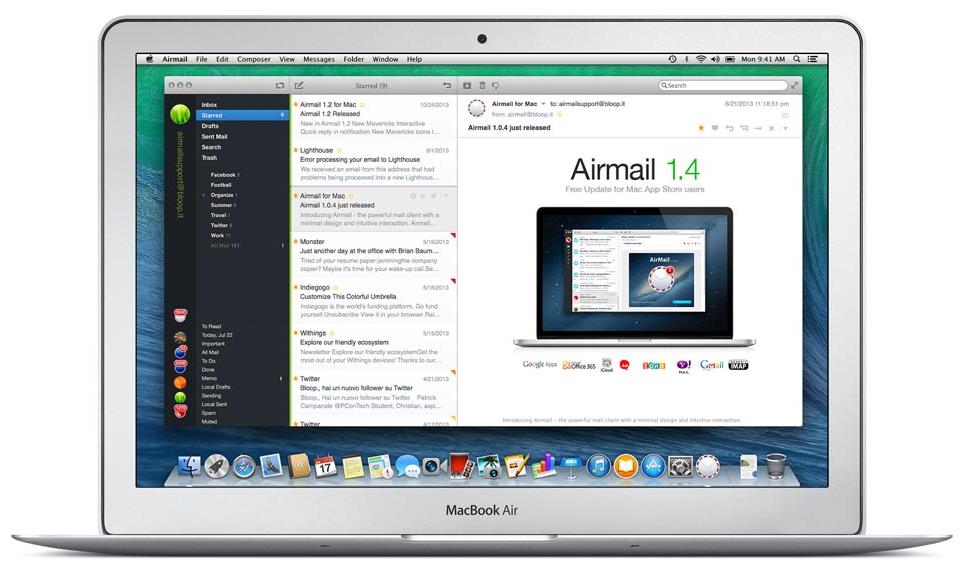
This article describes how to set up your Microsoft Exchange2010 email account with Mac Mail.
Note: Exchange 2010 runs only on Mac OS X version 10.6 or later. Ifyou’re unsure about which OS X version you’re running, click theApple icon located in the top-left corner and select About ThisMac.
Microsoft Exchange Client
- Open Mac Mail and select Mail > Preferences.
- In the new window that appears, click the Accounts tab in thetop menu bar and then click the plus (+) symbol in thelower-left corner.
Select Exchange and then click Continue.
On the next page, enter your full name and your entire MicrosoftExchange email address and password. Then click Continue.
- If your Autodiscover CNAME record is set correctly, Mailautomatically pulls the correct server settings for you. Skip toStep 6.
- If the Autodiscover CNAME record is not set correctly, you canset up the account manually. Continue to Step 5.
- Enter the following information and then click Continue:
- Description - Enter a descriptive name for your mail account(for example, Work Mail).
- User Name - Enter your entire email address (for example,user@example.com).
- Password - Enter the password associated with the emailaccount you are setting up.
- Server Address - Enter connect.emailsrvr.com.
Confirm the settings and then click Continue.
Choose any other options that you want to enable, and then clickDone.
Your Microsoft Exchange 2010 email account is now set up with Mac Mail.
Experience what Rackspace has to offer.
©2020 Rackspace US, Inc.
Mac App Exchange Calendar Client Free
Except where otherwise noted, content on this site is licensed under a Creative Commons Attribution-NonCommercial-NoDerivs 3.0 Unported License